
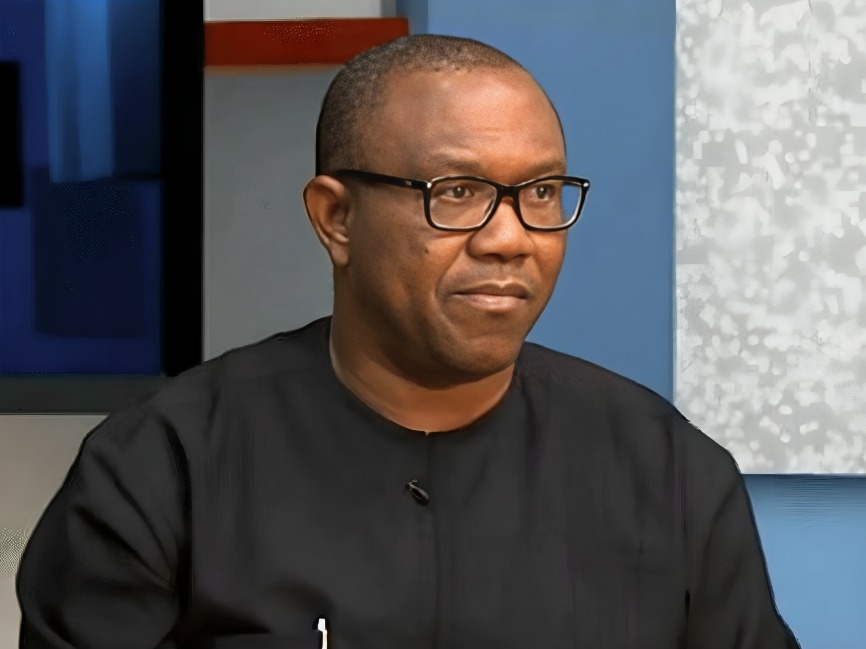
Obi Faults FG’s ₦20tn Borrowing Plan
Former Labour Party presidential candidate Peter Obi has criticised the Federal Government’s proposed borrowing of about ₦20 trillion to finance the 2026 budget, warning that Nigeria’s growing debt profile is becoming increasingly unsustainable and urging the country to adopt South Africa’s approach of borrowing for productive investments.
Obi made the remarks in a statement shared on his verified X account on Wednesday, June 18, 2026, expressing concern over what he described as persistent borrowing without corresponding investments capable of generating economic growth and future revenue.

The former Anambra State governor said the proposed loan comes at a time when Nigeria is still implementing its current budget and despite repeated assurances by government officials of improved revenue generation.
“Today, Nigerians woke up again to the troubling news that the Federal Government is planning to borrow about ₦20 trillion in new loans to finance the 2026 budget,” Obi said.
Questioning the rationale behind the proposal, Obi argued that the timing of the planned borrowing raises serious concerns about fiscal management and budget implementation.
“Where is the revenue from 2025? How can we be discussing trillions in new borrowing for 2026 when we are still implementing the 2025 budget?” he asked.
Obi said the development suggested that the implementation of the existing fiscal plan had fallen behind schedule.
“One is genuinely worried.”
“This suggests, very clearly, that the 2025 budget is still untouched and unimplemented,” he stated.
While making it clear that he does not oppose borrowing as an economic tool, Obi maintained that loans should be tied to productive sectors capable of expanding the economy, creating jobs and generating sufficient returns to repay the debt.
He urged Nigeria to emulate South Africa’s borrowing model, arguing that countries can responsibly access loans when such funds are invested transparently in projects that stimulate economic growth rather than finance recurrent expenditure or consumption.
Obi warned that continued borrowing without corresponding productive investment would further weaken the nation’s fiscal position.
“It is time for us to stop this fiscal rascality, especially with uncontrolled and unexplained borrowing that is not being invested in the productive sectors of our nation, but instead ends up in consumption,” he said.
He also expressed concern over the country’s rising debt servicing obligations, noting that they continue to consume a substantial share of government revenue.
“This is at a time when debt servicing alone is projected to gulp nearly half of our national revenue, and when our borrowing requirement has surged by over 72%,” Obi added.
According to him, borrowing should be directed towards sectors capable of increasing production, expanding exports, strengthening infrastructure and creating employment opportunities, rather than financing expenditure that offers little long-term economic value.
The former presidential candidate maintained that fiscal discipline, transparency and accountability are essential if Nigeria is to restore confidence in public finance and reduce pressure on future generations.
His comments have added to the ongoing national conversation on public debt and fiscal sustainability as the Federal Government prepares the framework for the 2026 Appropriation Bill.
While Obi acknowledged that borrowing remains a legitimate economic instrument, he insisted that it must be accompanied by prudent management and measurable investments capable of driving sustainable national development.


