
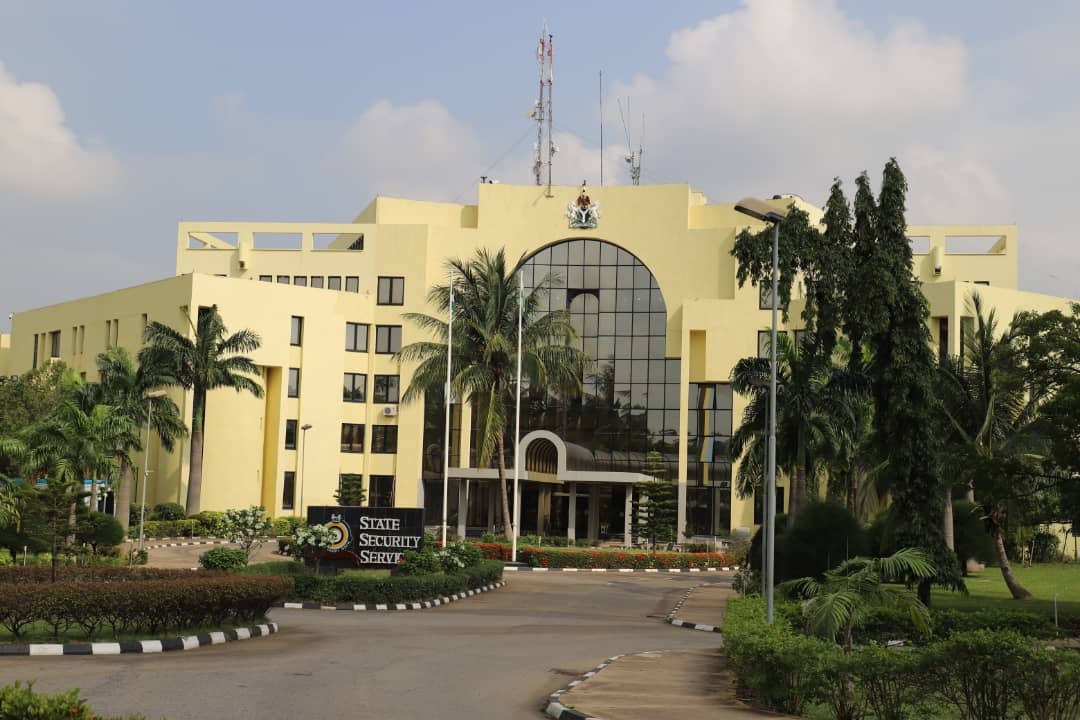
SPECIAL REPORT: Tosin Ajayi: Repositioning Nigeria’s Domestic Intelligence Service
Milestones, reforms and the evolving DSS under the Director-General, Tosin Ajayi.
Since Oluwatosin Adeola Ajayi assumed office as Director-General of Nigeria’s Department of State Services (DSS) in August 2024, his tenure has been marked by a combination of operational intelligence, institutional reforms, greater attention to due process and a more visible engagement with communities and the media.
Assessing the record requires some caution. Much of the DSS’s operational work is necessarily classified, while several positive assessments of Ajayi’s leadership have come from newspaper analyses, professional bodies and commentators rather than independently published government performance statistics. Nevertheless, publicly documented developments provide a useful picture of the priorities and milestones associated with his administration.

A career intelligence officer takes the helm
President Bola Ahmed Tinubu appointed Ajayi DSS Director-General on August 26, 2024, succeeding Yusuf Magaji Bichi. Ajayi had spent decades within the intelligence service, having joined as a cadet officer in 1990 and subsequently served in senior capacities, including State Director postings in Rivers, Bayelsa, Bauchi, Enugu and Kogi States before rising to Assistant Director-General.
His appointment therefore represented an elevation of a career intelligence officer with extensive field experience rather than an outsider being brought into the Service’s top job.
That background has informed what has emerged as one of the defining themes of his tenure: moving intelligence activity further towards prevention, early warning and intelligence-led intervention.
- From reaction to prevention
One of the principal claims made about the DSS under Ajayi has been a greater emphasis on intelligence-led prevention.
A December 2025 assessment published by THISDAY reported that the Service had concentrated on penetrating terrorist networks, disrupting kidnapping syndicates and tracking arms-trafficking networks across the North-East, North-West and parts of the Middle Belt. It also described greater intelligence fusion with the military, police and other security agencies.
Because successful intelligence operations are frequently classified, it is difficult to independently quantify how many attacks were prevented specifically because of DSS intelligence. The more defensible conclusion is that early warning, intelligence sharing and pre-emptive intervention have become prominent features of the Service’s publicly articulated operating philosophy under Ajayi.
That is particularly significant in an environment where Nigeria’s security threats increasingly cross geographical and institutional boundaries.
- Strengthening the prosecution end of counter-terrorism
Another notable feature of the Ajayi era has been the Service’s public emphasis on taking terrorism cases beyond arrest and into the courts.
In November 2025, the DSS disclosed that several major terrorism suspects were facing prosecution, including suspects linked to the 2022 St Francis Catholic Church attack in Owo, the 2025 Yelwata violence in Benue State, and other terrorism cases. The Service also reported the ongoing prosecution of Khalid al-Barnawi and other suspects in connection with terrorism-related offences.
The DSS specifically highlighted the prosecution of two internationally wanted terrorism suspects, Mahmud Muhammad Usman and Abubakar Abba, following their arrest in a high-risk intelligence-led operation in July 2025.
Ajayi’s stated position has been that suspects should be held accountable through lawful judicial processes.
This represents an important distinction between intelligence gathering and criminal justice: an arrest is not itself a conviction, and the ultimate determination of guilt belongs to the courts.
- A more visible human-rights and compensation policy
Perhaps the most distinctive publicly documented feature of Ajayi’s tenure has been the DSS’s handling of cases involving wrongful detention or operational mistakes.
In July 2025, the Service released 12 detainees, including persons who had been held for extended periods, according to The Guardian. One of those released, Abdulyakini Salisu, had reportedly been detained following a case of mistaken identity. The DSS ordered an initial ₦10 million compensation, an apology and access to free medical care.
The same reporting documented the release of 11 people previously arrested in Osun State and compensation measures running into millions of naira. The Service also initiated disciplinary measures in relation to wrongful arrests.
In another case, a businessman accidentally shot during a DSS operation received ₦20 million — ₦10 million in court-awarded damages and a further ₦10 million approved by Ajayi — alongside access to DSS medical services.
These actions are notable because they establish a public-facing principle that security operations can be subject to institutional review and remedial action when innocent people are harmed or wrongly detained.
- The Oyo case: investigation before continued detention
The same approach was reported again in August 2026.
The DSS released Mustapha Marwana, a carpenter arrested in connection with the abduction and killing of pupils and teachers in Oriire Local Government Area of Oyo State, after investigators reportedly found no evidence linking him to Ansaru or the attack.
Ajayi ordered his release after the investigation cleared him. Reports said the DSS also paid ₦3 million compensation to the artisan.
The episode is significant less because of the particular amount involved than because it demonstrates a continuing pattern: review the intelligence, correct the mistake where necessary, release the person and provide compensation.
In August 2026, legal and human-rights voices were publicly calling for the DSS compensation approach to be adopted more broadly across Nigeria’s security architecture.
- Education and welfare intervention
Ajayi’s tenure has also included measures directed inward, towards the welfare and professional development of DSS personnel.
A 2025 assessment reported renewed attention to welfare, training and career progression, including expanded training in contemporary intelligence techniques, cybersecurity and counter-terrorism.
The appointment of Folashade Adekaiyaoja as the DSS’s first Deputy Director-General was another institutional milestone during the period. Former DSS Director Mike Ejiofor described the appointment as significant because the Deputy DG position had existed within the Service’s structure but had not previously been occupied.
Beyond its symbolic importance, the position potentially provides an additional layer of senior management and a clearer career-progression structure within the organisation.
- Community intelligence as a security tool
Ajayi has also publicly argued that government security agencies cannot protect communities without the active participation of those communities.
Speaking in February 2025, he described communities as an important first line of defence against criminal and terrorist activity, citing historical instances in which local populations resisted attacks.
The philosophy is consistent with the broader intelligence model reported under his administration: intelligence does not originate only from sophisticated surveillance systems or headquarters; it also comes from people who understand their communities.
For a country confronting kidnapping, terrorism, communal violence, banditry and organised crime across widely dispersed territories, such local intelligence networks can be strategically important.
- Building a different relationship with the media
Perhaps no aspect of Ajayi’s tenure has attracted as much public attention as the relationship between the DSS and the Nigerian media.
In December 2025, the Nigerian National Committee of the International Press Institute (IPI) recognised Ajayi with a press-freedom commendation. IPI cited what it described as improved engagement, restraint and dialogue between the Service and media organisations. It specifically referenced cases involving journalists and said the DG had intervened in disputes involving media practitioners.
The recognition does not, by itself, establish that all media-security tensions have disappeared. Indeed, the relationship between intelligence agencies and the press remains inherently sensitive.
What can be documented is that a major international press organisation’s Nigerian committee publicly recognised the DSS leadership for its approach to media relations.
That is an unusual development for an intelligence organisation whose work naturally places it in tension with journalists investigating security and governance issues.
- Security and the business environment
The DSS has also been involved in national economic-security matters during Ajayi’s tenure.
In October 2025, the management of Dangote Refinery publicly acknowledged the roles of President Tinubu, National Security Adviser Nuhu Ribadu and DSS Director-General, Tosin Ajayi in resolving an industrial dispute involving PENGASSAN and the refinery.
This illustrates another dimension of contemporary intelligence work: protecting critical economic infrastructure and helping prevent industrial disputes from developing into broader threats to national economic activity.
The DSS’s mandate extends beyond counter-terrorism to internal security, counter-intelligence and protection of strategic national interests. The increasing importance of refineries, energy infrastructure and other critical assets therefore brings the Service into a wider economic-security environment.
- Recognition from the media and professional community
Ajayi’s tenure has attracted a series of recognitions.
The IPI recognition in December 2025 is one example. In August 2026, the Radio, Television, Theatre and Arts Workers Union (RATTAWU)* conferred on him its Golden Era Pillar of Critical and Strategic Intelligence for National Development Award, citing what it described as his valour, integrity, competence and capacity. ([New Telegraph][13])
There have also been public reports of recognition by the Nigeria Union of Journalists and other organisations. Such honours should properly be regarded as recognitions by the respective organisations, rather than independent measurements of DSS performance.
- A notable 2026 development: the Sowore case
An important recent development also illustrates the evolving balance between national security, law enforcement and political rights.
In August 2026, the DSS directed its counsel to seek an adjournment of the cybercrime case against African Action Congress presidential candidate, Omoyele Sowore until after the 2027 presidential election. The reported rationale was to allow Sowore to participate fully in the electoral process while the case remained pending.
The development subsequently generated debate, including criticism from Sowore’s legal team over the way the suspension was communicated.
Whatever the competing interpretations, the episode is relevant to assessing the direction of the Service because it demonstrates that the DSS under Ajayi has, at least in this instance, publicly considered electoral participation alongside an ongoing security-related prosecution.
It should therefore be understood as a developing legal matter rather than a settled institutional precedent.
THE LARGER PICTURE
Taken together, the publicly documented record points to several broad themes in Ajayi’s administration:
Intelligence-led prevention — greater emphasis on early warning, intelligence gathering and inter-agency cooperation.
Counter-terrorism through prosecution — pursuing cases through the courts rather than treating arrest as the end of the process.
Institutional accountability — reviewing wrongful arrests and compensating people affected by operational mistakes.
Human capital development — attention to welfare, training, career progression and organisational structure.
Community intelligence — recognising local populations as an essential component of internal security.
Media engagement — a more publicly visible emphasis on dialogue with journalists and media institutions, including recognition from IPI.
THE MILESTONE THAT MAY MATTER MOST
The most consequential question surrounding the Ajayi era is ultimately not how many awards have been presented to the DG, nor how many public statements the Service has issued.
It is whether the DSS can institutionalise a model in which effective intelligence, national security, professional discipline and respect for lawful process reinforce rather than undermine one another.
There are encouraging publicly documented indicators: compensation for wrongful detention, release of people cleared by investigation, prosecutions of serious terrorism cases, increased attention to intelligence coordination, the elevation of a first female Deputy DG, community-oriented intelligence and a more structured engagement with the media.
At the same time, Nigeria’s security challenges remain substantial, and terrorism, kidnapping, communal violence and organised crime continue to test the country’s security architecture. Consequently, the record should be viewed as an evolving reform and operational trajectory rather than a completed transformation.
For Ajayi, the central legacy question will be whether the changes associated with his leadership survive beyond individual directives and become embedded in the institution itself.
That, ultimately, is how the effectiveness of an intelligence-service reform agenda is measured: not simply by the personality of its Director-General, but by whether the institution that emerges is more professional, more accountable, more intelligence-driven and better equipped for the threats ahead.
AT A GLANCE: KEY MILESTONES UNDER TOSIN AJAYI
Period | Publicly documented milestone
August 2024 | Appointed DSS Director-General, succeeding Yusuf Magaji Bichi.
2024–25 | Increased emphasis on intelligence-led prevention and inter-agency intelligence cooperation.
February 2025 | Public advocacy for community participation in internal security.
2025 | Appointment of Folashade Adekaiyaoja as first female Deputy DG.
2025 | Release and compensation of detainees following case reviews.
2025 | High-profile terrorism prosecutions advanced through the courts.
December 2025 | IPI Nigeria press-freedom commendation.
2026 | Continued compensation/release measures in cases where investigations cleared suspects.
August 2026 | RATTAWU recognition for strategic intelligence and national development.
August 2026 | DSS moved to seek suspension of the Sowore case until after the 2027 election, according to multiple reports.


