
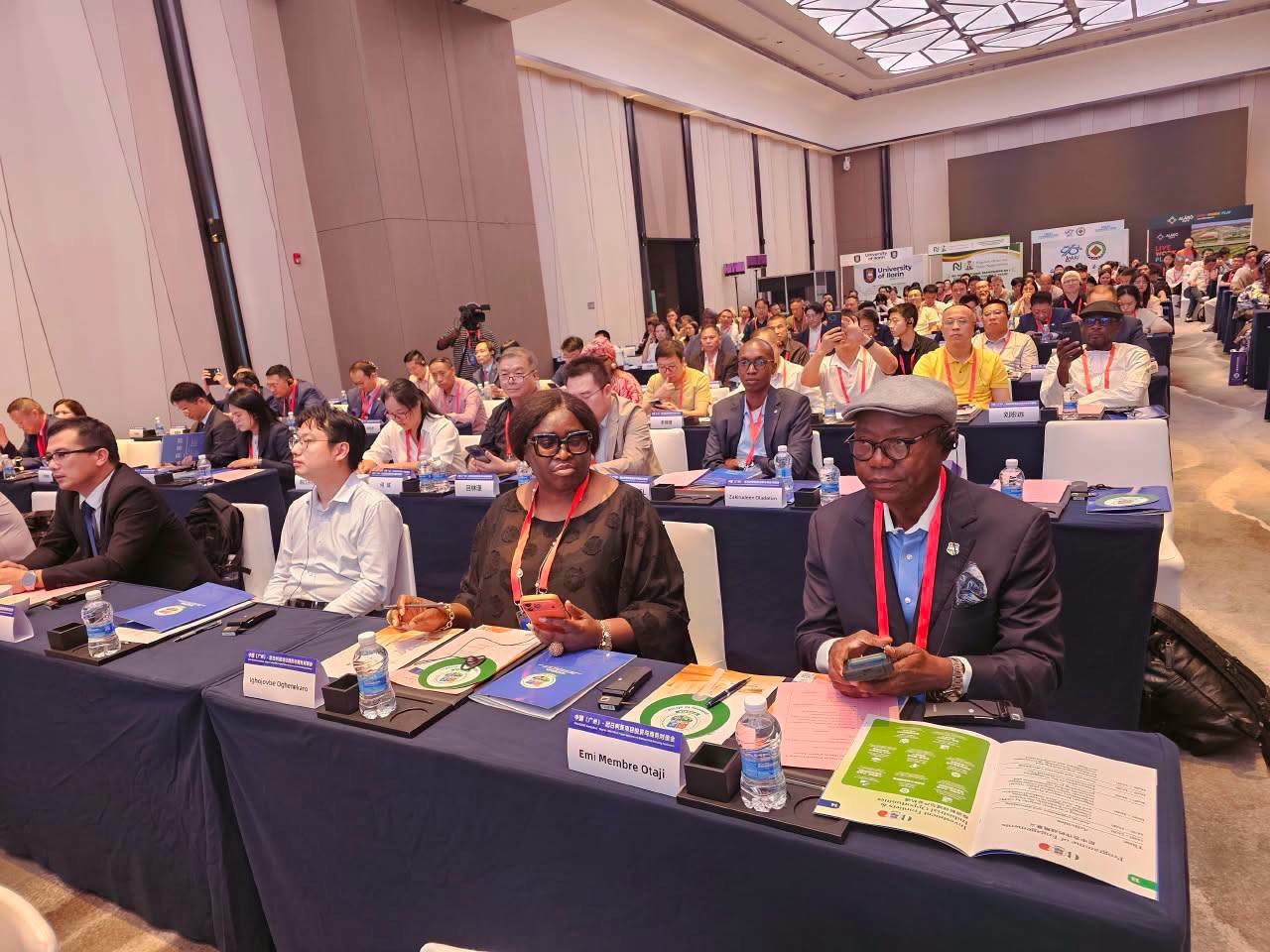
Membere-Otaji Woos Chinese Investors, Says Nigeria Offers Vast Opportunities
Nigerian business leader, Alabo Dr Emi Membere-Otaji, has called on Chinese and other international investors to take advantage of Nigeria’s vast investment opportunities, describing the country as a strategic gateway to the West African market and the wider African economy.
Membere-Otaji made the call while presenting a Nigerian enterprise project pitch at the 2026 Hainan Tour for Foreign-Invested Enterprises, held alongside the Hainan Free Trade Port International Investment Cooperation Promotion Conference and Hainan-Shanxi Cooperation programme.

In his remarks titled “Why Invest in Nigeria”, he identified the country’s estimated population of 250 million, youthful workforce and strategic position within the 16-country West African subregion as major attractions for foreign capital.
He also pointed to the African Continental Free Trade Area, which provides access to a continental market of about 1.5 billion people, arguing that investors establishing businesses in Nigeria could position themselves to serve markets beyond the country.
“There is no better time to invest in Nigeria,” he told participants, citing what he described as steady economic growth, easing inflationary pressures, relative exchange-rate stability and ongoing improvements in the country’s business and regulatory environment.
The business leader said the increasing availability of data from the National Bureau of Statistics, digitalisation of government processes and harmonisation of taxes and levies were helping to improve the investment climate.
He also highlighted tax incentives, including pioneer status tax holidays for qualifying investments, as well as reforms in port operations under public-private partnership arrangements.
According to him, the participation of major international terminal operators, including MSC, A.P. Moller-Maersk and COSCO, in Nigeria’s port sector reflects growing investor confidence and opportunities for further expansion.
He further referenced the establishment of the Nigerian Ports Economic Regulatory Agency, describing it as an important development for protecting the interests of importers, exporters, shipping companies and port operators.
Membere-Otaji said simplified cross-border payment systems and the presence of investment-support institutions had also made it easier for foreign businesses to explore opportunities in Nigeria.
He identified the Nigerian Investment Promotion Commission, Nigerian Export Promotion Council, state investment agencies and the Nigerian Association of Chambers of Commerce, Industry, Mines and Agriculture (NACCIMA) as important channels through which prospective investors could obtain business information, establish contacts and navigate the investment environment.
The Nigerian business leader outlined several sectors with significant investment potential, beginning with agriculture and agribusiness, where he identified fisheries, trawling, aquaculture, crop production and agro-processing as areas requiring capital and technical expertise.
He also highlighted power generation, transmission and distribution, including renewable energy, as critical areas for investment, alongside solid minerals such as lithium and gold.
In manufacturing, he called attention to opportunities in industrial parks, free trade zones and economic zones, while identifying technology, healthcare and urban development as sectors with growing demand for investment.
He specifically mentioned fintech, digital health, data centres, innovation hubs, affordable housing, pharmaceutical production, diagnostic services and waste-to-wealth initiatives.
On the maritime and transport front, Membere-Otaji said Nigeria’s coastal geography and maritime assets offered opportunities in ship ownership, shipbuilding, repairs, port and terminal development, logistics and other blue economy activities.
He described oil and gas as another major investment destination, noting that opportunities existed across the upstream, midstream and downstream segments, including petrochemicals, fertiliser production, gas pipelines, liquefied natural gas, compressed natural gas and related infrastructure.
He said Nigeria’s gas monetisation drive under the Decade of Gas policy and the country’s broader energy transition agenda were creating additional opportunities for investors.
Infrastructure development and maintenance, he added, remained another area with substantial unmet demand.
Membere-Otaji observed that investment gaps existed across virtually every sector of the Nigerian economy, creating opportunities for both local and foreign investors to establish new businesses or expand existing operations.
He noted that several Chinese companies were already active in different sectors of the Nigerian economy, with some entering as start-ups and others investing in established businesses to increase their scale of operations.
Encouraging more Chinese investors to explore the Nigerian market, he assured them that credible local business partners were available to support their entry and operations.
“As a local investor in Nigeria, I can confidently tell you, come in, the coast is open, the gaps are huge, return on investments attractive,” he said.
“Vetted and reliable local investors will be ready to hold your hands and walk the journey with you. The time to invest in Nigeria is now.”
His presentation positioned Nigeria not merely as a destination for foreign capital but as a potential production, processing and distribution hub for investors seeking access to West Africa and the wider African market.


