
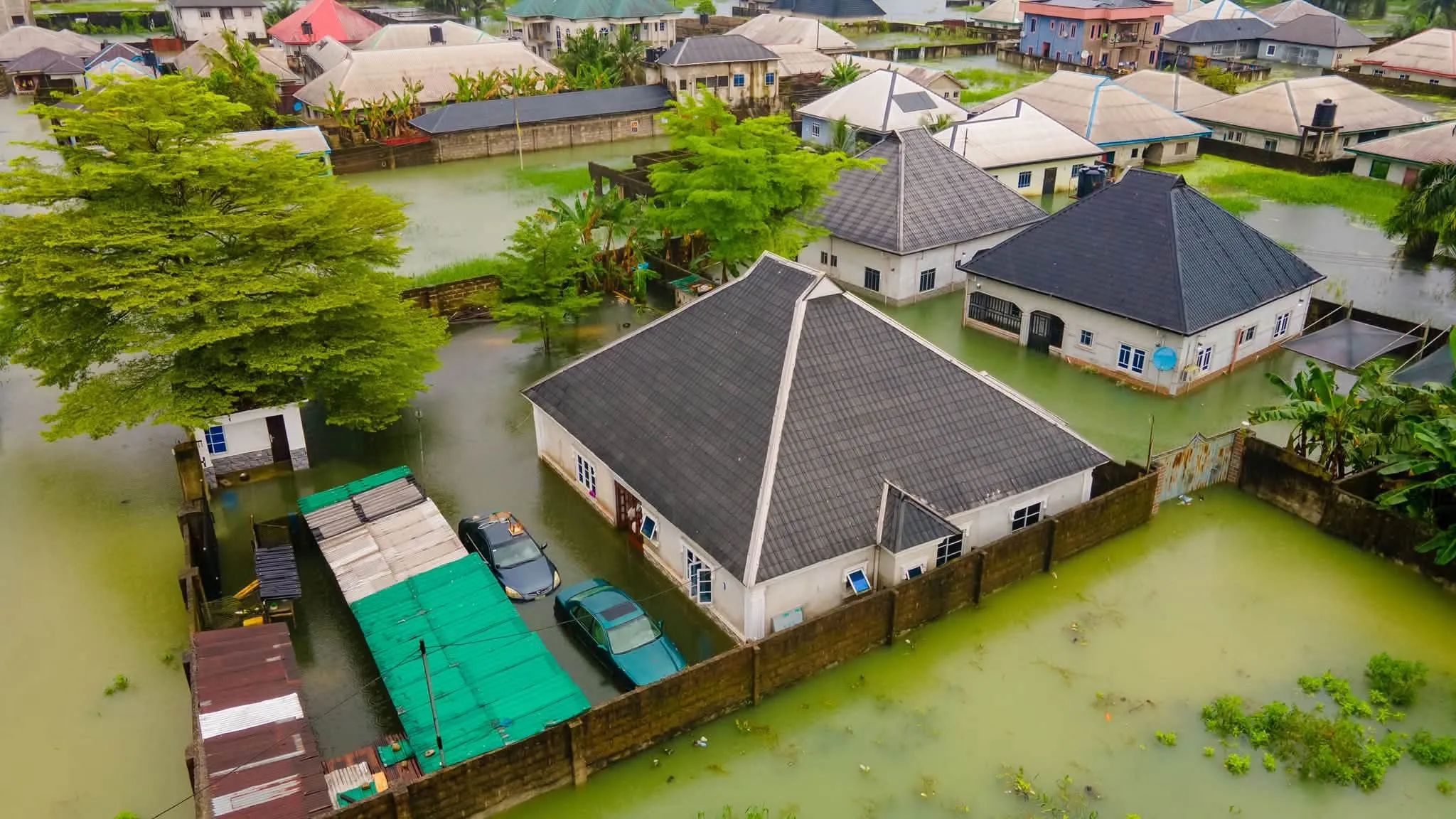
Flooding Imposes Economic Hardship on Rivers Residents as Thousands of Homes Submerged
For families in Eneka and Rupokwu communities of Obio/Akpor Local Government Area, the persistent rainfall has turned homes into islands of dirty floodwater, forcing parents and children to flee with little more than the belongings they could salvage.
Some families are now sleeping in churches and uncompleted buildings, others have been separated from loved ones and are staying with relatives, while children have stopped going to school.

Businesses have shut down, household incomes have been disrupted and properties worth millions of naira have been destroyed.
At least one death has also been reported as the flooding continues to spread into previously unaffected areas, leaving residents fearful that the worsening situation could claim more lives if the rains persist.
Investigations by Kristina Reports revealed that thousands of homes in the two communities have been affected by the flood, with residents describing the current situation as significantly worse than flooding experienced in the area about nine years ago.
The human and economic toll is becoming increasingly severe, as schools, churches and businesses in affected locations have been forced to close, leaving families struggling to meet basic needs while they seek temporary shelter.
Residents also expressed concern over the health implications of the floodwater. They said snakes, fish and other reptiles have been seen moving through residential areas, while borehole water — a major source of drinking water for many households — is feared to have been contaminated by floodwater.
One victim, Mrs Joy, an Eneka resident, appealed to the Rivers State Government for urgent assistance and relief materials.
«“Please, the government should help us. My children are not going to school anymore because of the flood. All our properties worth millions of naira have been destroyed. Government should address the cause of the flood.”»
Residents told Kristina Reports that the flooding has also exposed longstanding weaknesses in drainage and physical planning, with preliminary findings indicating that some buildings were constructed on waterways or in areas without adequate drainage channels to allow water to flow naturally.
In Rupokwu, Mrs Amadi, another flood victim, said she and her family have been forced to seek refuge in an uncompleted building, while some of their neighbours are staying in church premises until the situation improves.
For Mrs Stella, the disaster has fractured her family. She said she, her husband and their five children are currently staying in different locations after being displaced by the flood.
She said residents whose homes have not yet been submerged are living in fear that continued rainfall could soon force them out as well.
Another resident, Mr Uchenna, attributed part of the flooding to indiscriminate waste disposal and blocked waterways.
«“The flooding is partially due to indiscriminate waste disposal and blocking of waterways. Although the community experienced flooding about nine years ago, this current one is far worse.”»
An environmental expert, Mr Okoro James, expressed concern over the sale and development of flood-prone areas, particularly locations that serve as natural water channels.
He called on the Rivers State Government and the Ministry responsible for physical planning and urban development to strengthen monitoring of construction activities and prevent buildings from obstructing natural waterways.
Speaking with Kristina Reports, Coordinator of Pilex Centre for Civic Education and Initiative, Courage Nsirimovu, described the flooding as a major environmental and humanitarian crisis.
Nsirimovu identified climate change and other environmental pressures among factors contributing to the increasing flood risk in Rivers State, stressing that adaptation measures must form a critical part of the state’s response.
He called for stronger enforcement of environmental regulations, particularly against indiscriminate waste disposal and activities that obstruct drainage channels.
Nsirimovu also identified inadequate drainage infrastructure in areas requiring additional capacity as another factor worsening the humanitarian consequences of flooding.
«“This is affecting the economy. For some people whose houses are submerged, their properties have been affected, so government needs to do something about it.”»
He urged the Rivers State Government and relevant agencies, including the Ministries responsible for Environment and Sanitation and the National Oil Spill Detection and Response Agency (NOSDRA), to work together to strengthen enforcement of environmental regulations and improve drainage infrastructure.

As the rains continue, residents are appealing for immediate relief and emergency support while calling for lasting measures to address the underlying causes of flooding, including blocked waterways, inadequate drainage and development on natural flood channels.
For the families already driven from their homes, however, the crisis is no longer simply about rising water.
It is about lost homes, interrupted education, destroyed livelihoods, separated families and the growing struggle to survive.


