
Navy Dismantles Illegal Refining Site on Nanabie Creek, Bonny
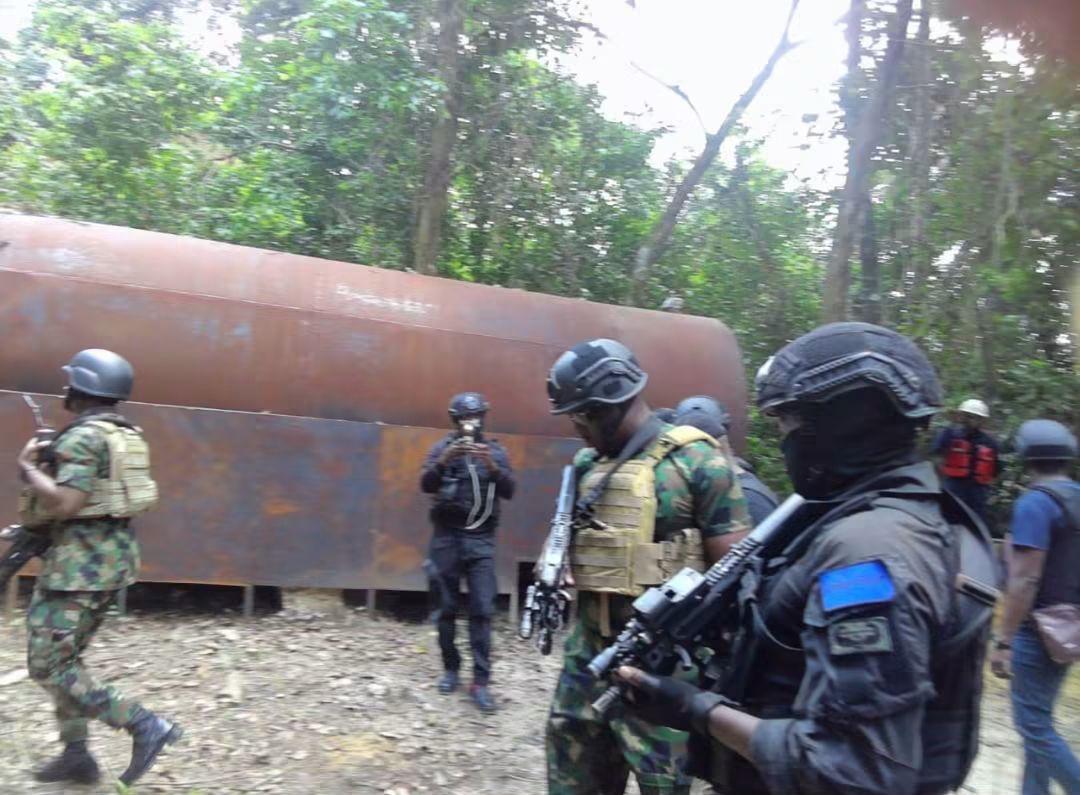
The Nigerian Navy Forward Operating Base (FOB) Bonny has dismantled another illegal refining site in Bonny Local Government Area of Rivers State, destroying a large cooking pot and three storage tanks believed to have been prepared for the processing and storage of stolen crude oil.
The latest operation took place at Promise Land Community along Nanabie Creek, following the discovery of the facility on Wednesday, September 30, 2026, based on credible intelligence.

The intervention was carried out on Friday, October 2 by personnel of FOB Bonny under the command of Captain Stanley Mazi Chukwuemeka Umeh.
Director of Naval Information, Captain Abiodun Folorunsho, said the operation was conducted under Operation DELTA SENTINEL, the Nigerian Navy’s ongoing campaign against crude oil theft, illegal refining and related maritime crimes.

According to the Navy, the facility contained one large cooking pot and three large storage tanks.
The equipment was dismantled and destroyed in accordance with established regulations, thereby denying suspected oil thieves the infrastructure required to process and store stolen crude oil.

The latest intervention is particularly significant because it represents a return to an area where FOB Bonny had already disrupted attempts to establish illegal refining infrastructure earlier in the year.
In May, the Base reportedly foiled efforts to establish two newly constructed illegal refining sites in the Promise Land area, after aerial surveillance exposed concealed equipment beneath vegetation.

The renewed discovery therefore points to the persistent attempt by illicit operators to exploit the remote creek network around Bonny for crude oil theft and illegal refining, even after previous infrastructure has been dismantled.
The operation also comes against the background of a sustained series of anti-crude-oil-theft interventions by FOB Bonny in 2026.

In July, the Base uncovered nine illegal refining sites comprising 23 dug-out pits around the Wakama/Bolo and Aworkiri areas, with 18 pits containing an estimated 104,000 litres of suspected stolen crude oil.
Five other freshly excavated pits were reportedly neutralised before they became operational.

Earlier in September, FOB Bonny also uncovered approximately 87,000 litres of suspected stolen crude oil at four newly activated illegal refining sites around Awokiri, while a subsequent operation in the Bethel Creeks reportedly uncovered about 182,000 litres of suspected stolen crude oil in concealed pits.
Kristina Reports’ review of FOB Bonny operations also shows that the Base’s campaign has increasingly relied on intelligence-led patrols, aerial surveillance, tactical landings and persistent monitoring of creek corridors.

Similar operations in Allison, Okpokiri and other parts of the Bonny axis have uncovered concealed pits, hoses, storage facilities and refining equipment.
For Bonny, where major oil, gas and maritime assets operate alongside extensive waterways and mangrove terrain, the continuing discovery of new or reactivated illegal refining infrastructure underscores the importance of sustained surveillance.
The latest Promise Land operation demonstrates that dismantling established facilities is only one part of the challenge; preventing their re-establishment remains equally critical.

The Navy said it would continue strengthening surveillance and monitoring across its area of operations to prevent illegal refining sites from being established or reactivated and to deny criminal operators the infrastructure needed to sustain crude oil theft and related activities.
Kristina Reports’ assessment indicates that the Promise Land operation is not an isolated raid but another episode in a continuing contest over Bonny’s waterways.
The recurring appearance of illegal refining infrastructure after previous sites have been dismantled suggests that intelligence gathering, persistent maritime presence and rapid follow-up operations will remain central to keeping the creek corridors secure.


