
NLNG: The Financial Backbone of the Bodo–Bonny Road Project
How the Nigeria Liquefied Natural Gas Limited (NLNG) moved beyond corporate social responsibility to become the principal financing institution behind one of the Niger Delta’s most consequential infrastructure projects.
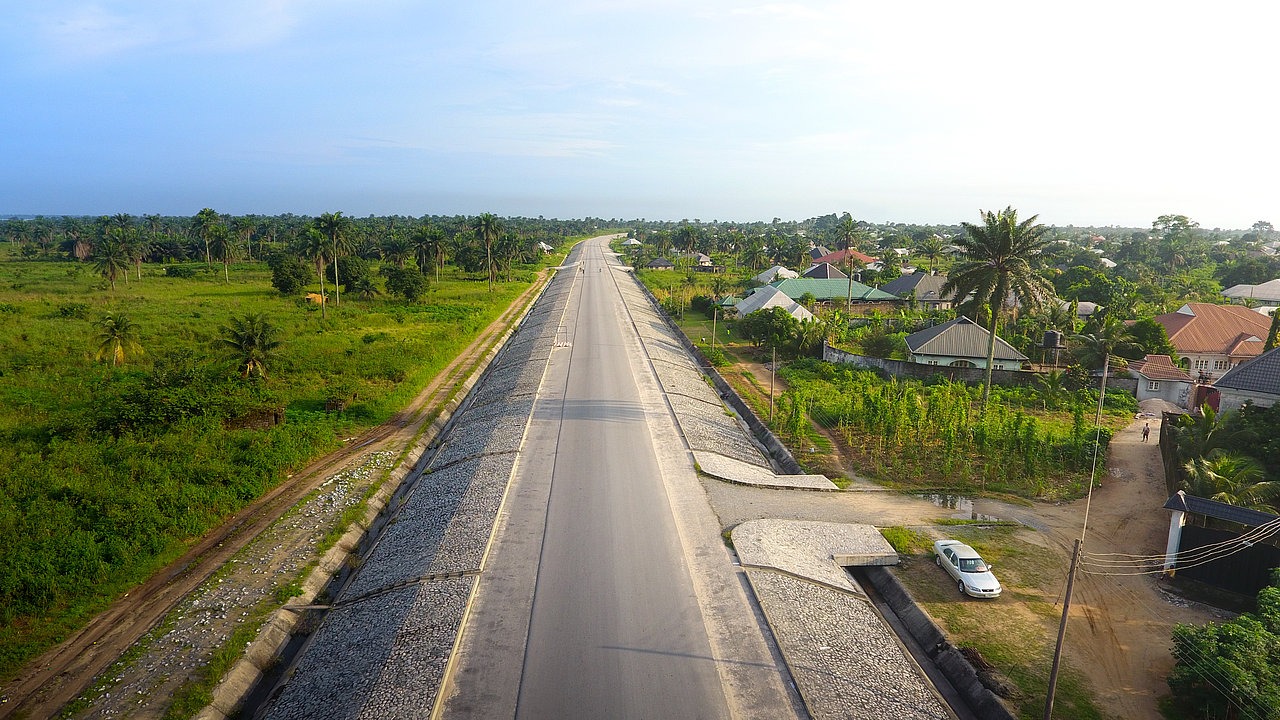
The completion of the Bodo–Bonny Road represents more than a major federal infrastructure achievement. It is also a significant demonstration of how NLNG, a company operating from Bonny Island, became the principal financial driver of a road project that successive governments struggled for decades to deliver.

Although the Federal Government remains the project owner and the Federal Ministry of Works its implementing authority, NLNG’s financial commitment proved decisive in sustaining construction after repeated funding difficulties.
The partnership became formal in September 2017 when the Federal Government, NLNG and Julius Berger Nigeria Plc signed a tripartite agreement for the approximately ₦120.6 billion project. Under the original arrangement, the Federal Government and NLNG were each expected to provide 50 per cent, translating to approximately ₦60.3 billion apiece.
The arrangement was particularly significant because it brought together the government’s infrastructure responsibility, NLNG’s financial capacity and Julius Berger’s engineering expertise. NLNG’s then Managing Director, Tony Attah, described the road as an opportunity to ease the transportation difficulties of Bonny residents and expand economic opportunities in host communities.
When NLNG Became the Principal Financier
The original funding arrangement did not proceed as envisaged. A 2021 Federal Government project verification report recorded that the Federal Government had failed to meet its counterpart funding obligations. It quoted the contractor’s representative as stating that NLNG had consequently become the sole financier of the project.
This development marked a major shift in the project’s financing history: NLNG was no longer simply contributing half of the original contract sum but had assumed a much greater financial responsibility for keeping construction alive.
The company operated within the Federal Government’s Road Infrastructure Development and Refurbishment Investment Tax Credit Scheme, established under Executive Order 007. The arrangement allowed qualifying infrastructure expenditure to be recovered through tax credits against future corporate income tax liabilities.
In August 2022, the Federal Inland Revenue Service issued NLNG a tax-credit certificate of ₦37.28 billion for its Bodo–Bonny Road expenditure. This provides documentary evidence of the government’s recognition of a portion of NLNG’s financing, although it should not be mistaken for the company’s total project contribution.
From ₦120.6 Billion To ₦280 Billion
The financial demands of the project increased substantially. The contract was revised to approximately ₦199.924 billion in 2021 before the Federal Government approved a further increase to ₦280 billion in September 2024. The Federal Ministry of Works described the 2024 approval as the final funding package for completion.
During an inspection in June 2024, Works Minister David Umahi publicly commended NLNG for funding the project and acknowledged the company’s contribution to efforts to bring construction to completion.
NLNG’s Stake in Bonny’s Development
NLNG’s involvement carries particular significance because Bonny Island hosts its major liquefied natural gas production facilities. For decades, the company’s operations and those of other industrial establishments have depended heavily on marine transportation.
The Bodo–Bonny Road therefore addresses a longstanding connectivity challenge affecting the company’s host environment, workforce mobility, logistics, community relations and the wider industrial economy.


NLNG’s own infrastructure development records describe the road as a public-private partnership and recognise its potential to connect Bonny Island to mainland Rivers State, expand economic opportunities and improve community mobility.
Its financial participation also represents a significant departure from the traditional understanding of corporate social responsibility. Rather than limiting its contribution to community projects, utilities and social interventions, NLNG became a major partner in delivering strategic national infrastructure.
The Bodo–Bonny Road demonstrates that strategic corporate investment can help address infrastructure gaps that government funding alone has struggled to resolve. But its lasting value will depend on transparency, maintenance, accessibility and the economic opportunities created for surrounding communities.
For NLNG, the road is more than a construction project. It is a landmark investment in the connectivity of the island that hosts its operations and a defining chapter in its relationship with Bonny and the wider Niger Delta.


