
Bonny–Opobo: Ancestral Ties Rekindled Ahead of Opobo Coronation
As Amanyanabo-elect Jaja returns to “ancestral home”, two historic kingdoms revive a bond forged in trade, kinship and a turbulent 19th-century past
When the Amanyanabo-elect of Opobo Kingdom, His Majesty, King Charles Douglas Mac-Pepple Jaja, Jeki VI, walked into the Bonny Chiefs’ Council on Wednesday, September 2, 2026, he was not merely paying a courtesy call ahead of his coronation.

He was, in his own words, returning to his ancestral home.
“Bonny is my ancestral home. I cannot sit on the Throne of Opobo Kingdom without first coming to touch my feet on Bonny soil and receive the blessings of my ancestors,” the King-elect told the Bonny Chiefs.
His declaration gave the visit a significance extending beyond the September 26 coronation.
It brought into focus an old relationship between Bonny and Opobo, two historic Niger Delta kingdoms whose stories have been intertwined through ancestry, commerce, royal houses, migration, conflict and, ultimately, enduring cultural ties.
A kingdom born from Bonny
The history of Opobo cannot easily be separated from Bonny. In the 19th century, Jubo Jubogha, popularly known as Jaja, rose from slavery to become head of the powerful Anna Pepple House in Bonny and one of the region’s most influential palm-oil traders.
Historical accounts place the decisive rupture between Jaja’s faction and the rival Manilla Pepple House in the late 1860s. Following the conflict, Jaja and his followers established the settlement that became Opobo.
Thus, while Opobo developed into a powerful kingdom in its own right, its institutional and commercial roots were deeply connected to the Bonny world from which Jaja emerged.
Indeed, historical accounts describe Opobo as being established east of Bonny after the 1869 conflict and subsequently becoming a major force in the palm-oil trade.
The relationship, therefore, was never simply one of two neighbouring kingdoms. Bonny was part of Opobo’s origin story.
From rivalry to relationship.
The early relationship was not without tension. The emergence of Opobo altered the balance of economic power in the eastern Niger Delta, particularly in the lucrative palm-oil trade.
Opobo attracted trading interests and competed with Bonny for access to inland markets. Historical accounts record subsequent tensions and conflicts involving the two centres and their allies.

But the history also contains evidence of efforts to restore peaceful relations.
A peace treaty was concluded between Bonny and Opobo in 1873, demonstrating that the relationship had already moved beyond outright confrontation towards negotiated coexistence.
That history gives contemporary gestures of friendship between the kingdoms an additional layer.
The relationship today is not being built from scratch. It is being renewed from an old foundation. The meaning of the Pepple connection. The current royal connection makes the story even more compelling.
The name Pepple runs deeply through the histories of both kingdoms. Bonny’s royal history is dominated by the Pepple dynasty, while Opobo’s royal and chieftaincy history also contains prominent Pepple and Mac-Pepple connections.
Historical records of Opobo’s rulers include Arthur MacPepple and Frederick Sunday Jaja, while the kingdom’s history remains closely associated with the Jaja and Pepple traditions.
It is against this background that the arrival of the Amanyanabo-elect Charles Douglas Mac-Pepple Jaja in Bonny carries particular resonance.
His visit was framed not simply as an invitation to a coronation but as a symbolic acknowledgement of the historical soil from which the Opobo story emerged.
Bonny opens its doors
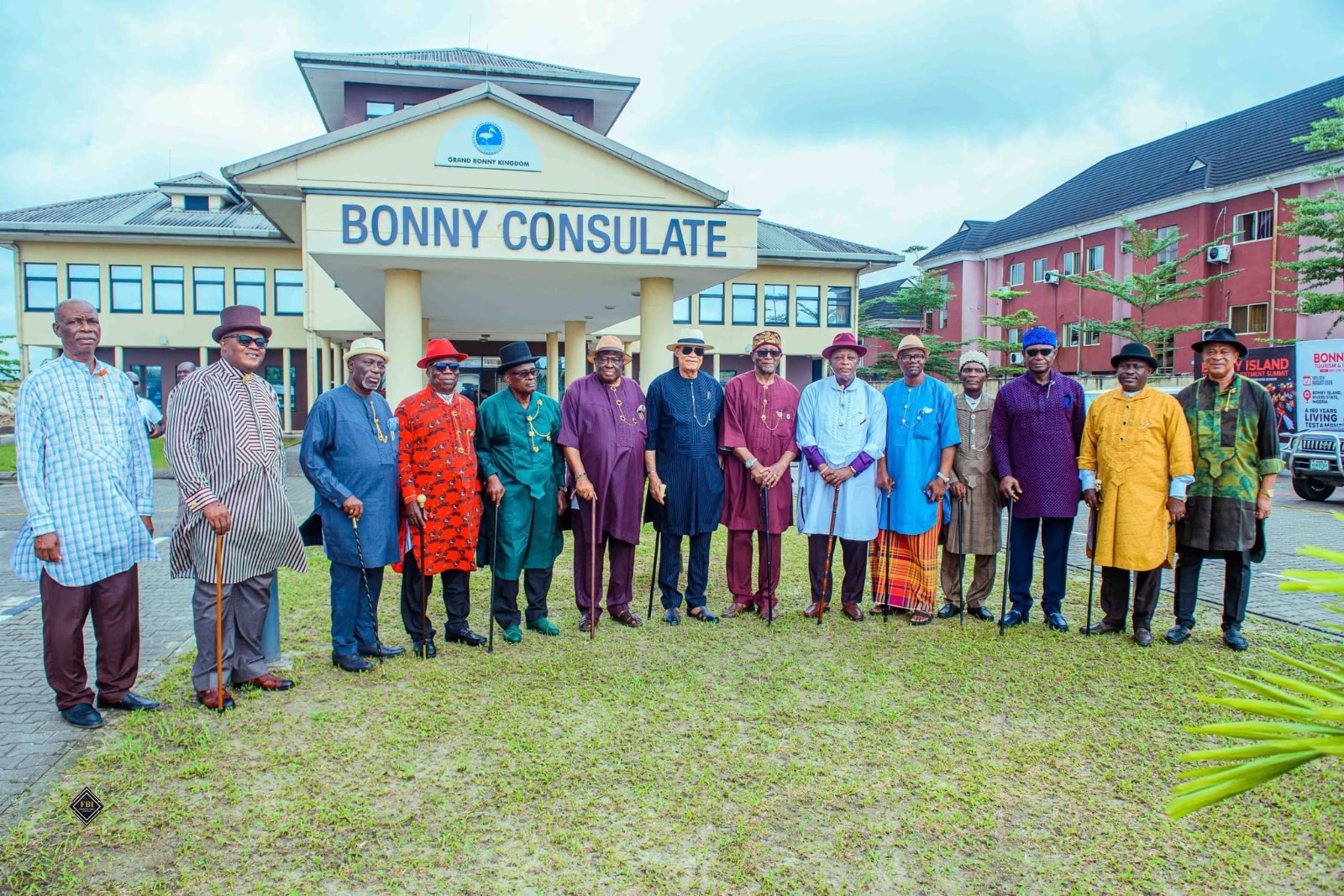
Receiving the delegation at the Bonny Consulate Building, Chairman of the Bonny Chiefs’ Council, Se-Alabo Dagogo Soala Claude-Wilcox, welcomed the Amanyanabo-elect and his delegation.

He described the personal visit as a demonstration of respect for the historic and ancestral ties between the two kingdoms.
The Bonny Chiefs’ Council also assured the Opobo monarch-elect that Bonny would be represented at the September 26 coronation.
“We shall be there in full force,” Se-Alabo Claude-Wilcox declared.
Other Bonny chiefs, including Se-Alabo Reginald Captain Hart and Se-Alabo Sotonye Banigo, also welcomed the visit, with Hart describing the King’s personal appearance as a demonstration of humility and respect.
More than a coronation invitation
For Opobo, the September 26 coronation represents the formal beginning of a new royal chapter.
But the September 2 visit to Bonny suggests that the occasion is also being framed within a much older narrative — one that connects the two kingdoms through ancestry, royal institutions, commerce and shared Niger Delta history.

The King-elect told the Bonny Chiefs that the Amanyanabo of Grand Bonny Kingdom, His Majesty King Edward Asimini William Dappa Pepple III, Perekule XI, had continued to offer support, encouragement and cooperation towards his coronation.
That relationship gives the forthcoming ceremony another dimension. It is not merely a transfer of royal authority within Opobo. It is an occasion around which an old network of relationships is being publicly reaffirmed.
A new chapter in an old story
The Bonny–Opobo story has passed through several phases: shared roots, commercial competition, political conflict, negotiated peace and enduring cultural affinity.
Nearly a century and a half after the turbulent events that separated Jaja’s faction from Bonny, the symbolism of an Opobo monarch-elect returning to Bonny to seek the goodwill of the kingdom is striking.
The gesture suggests that the old divisions of history need not define the relationship between the two kingdoms today.

Instead, the focus is increasingly on what binds them: ancestry, culture, royal history and a shared place in the story of the Niger Delta.
As King Charles Douglas Mac-Pepple Jaja prepares to ascend the Opobo throne on September 26, 2026, his visit to Bonny may ultimately be remembered as more than a pre-coronation courtesy call.
It was a royal homecoming. And perhaps, in the larger sweep of history, a reminder that Bonny and Opobo have always been connected by a story much older than the boundaries that separate them.


