
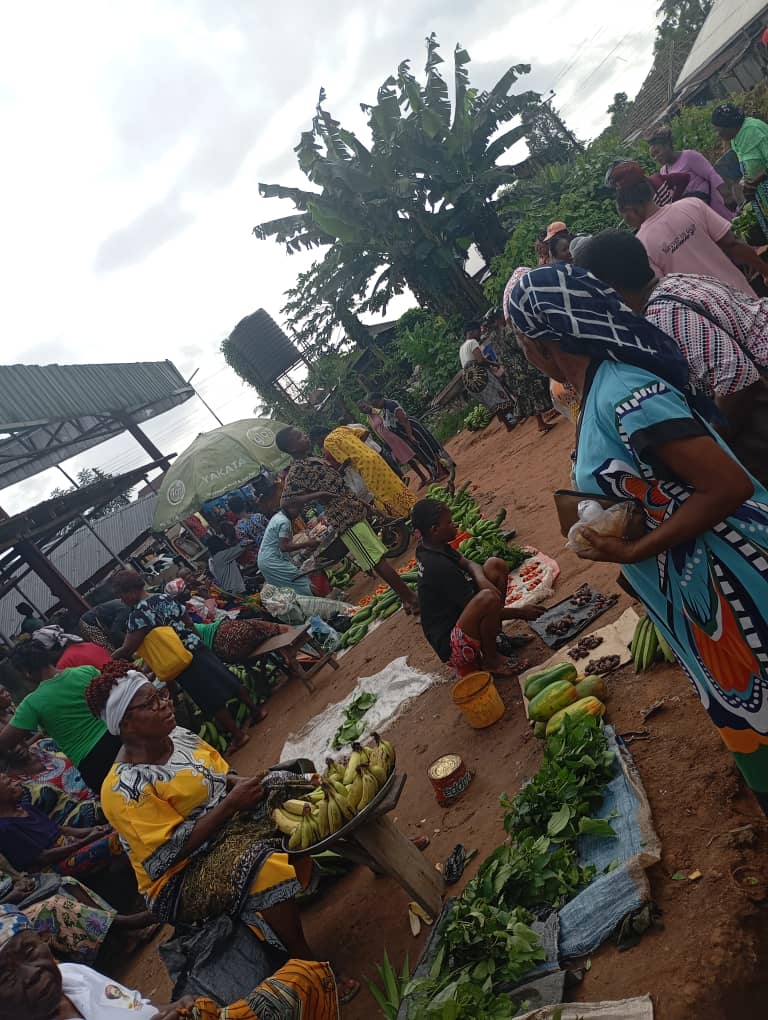
Mixed Reactions Trail Sharp Drop in Food Items at Oforola Eke Market
The popular Eke Market in Oforola Community in Owerri-West Local Government Area of Imo State came alive this week with mixed feelings as the prices of major food items dropped drastically, bringing joy to buyers but worry to sellers.
From garri to plantain, prices that once kept many families struggling have now fallen to a level that excites both residents and passersby.


Just months ago, a ₦1,000 purchase of garri fetched only four to five cups. Today, buyers get as much as ten to eleven cups for the same amount.
Plantain, which used to cost ₦15,000, ₦12,000, or ₦10,000 per bunch, and even ₦8,000 to ₦9,000 for smaller ones, is now sold between ₦7,000 for big bunches and as low as ₦2,000 for smaller sizes. For buyers, it’s a long-awaited relief.
“We can now buy things without fear,” said a passerby who expressed happiness over the sudden fall in prices.
However, for many traders at Eke Market, the story is different.
A trader from Amoji Village, Rose Amadi, who buys and resells garri, shared her excitement for buyers but admitted that sellers are not smiling.
“The market is good for customers now. They are happy and buy plenty, but for us sellers, it’s not easy because the gain is small.”
“Before, we sold five cups for ₦1,000, now we sell eleven cups. It affects our profit,” she lamented.
On her part, an indigene of Umuogide Village, Joy Ogu , who also buys and resells garri, shared similar worries.
“Things are cheap now, and buyers are rejoicing, but we the traders are just managing. We can’t complain too much because it’s good that people are happy.”
For Chinyere Njerem, a producer and seller of garri, the price fall has affected her business directly.
“We spend a lot to produce, yet when we bring it to market, we sell almost at a loss. It’s painful but that’s the situation.”
Another trader, Mable Obodo, who also sells garri, described the situation as “a blessing mixed with tears.”
“The crowd in the market is now more, but our pockets are not smiling,” she added with a sigh.
Despite the mixed emotions, Eke Market remains busy and vibrant as people troop in from different parts of Oforola and neighboring villages to take advantage of the reduced prices.
“Whether buyer or seller, Eke Market is still our pride,” said another woman smiling as she packed her goods.
The Eke Market Day has long stood as a symbol of unity, culture, and community life in Oforola.
Beyond trade, it brings together people from different villages, Amoji, Umuogide, Umuimeka, Obagwa, Umuadu, Umueke, Umuagubiam , Umuezeroke, and Amaku, reminding everyone that the market is not just a place to buy and sell, but a heartbeat of togetherness and tradition.


