
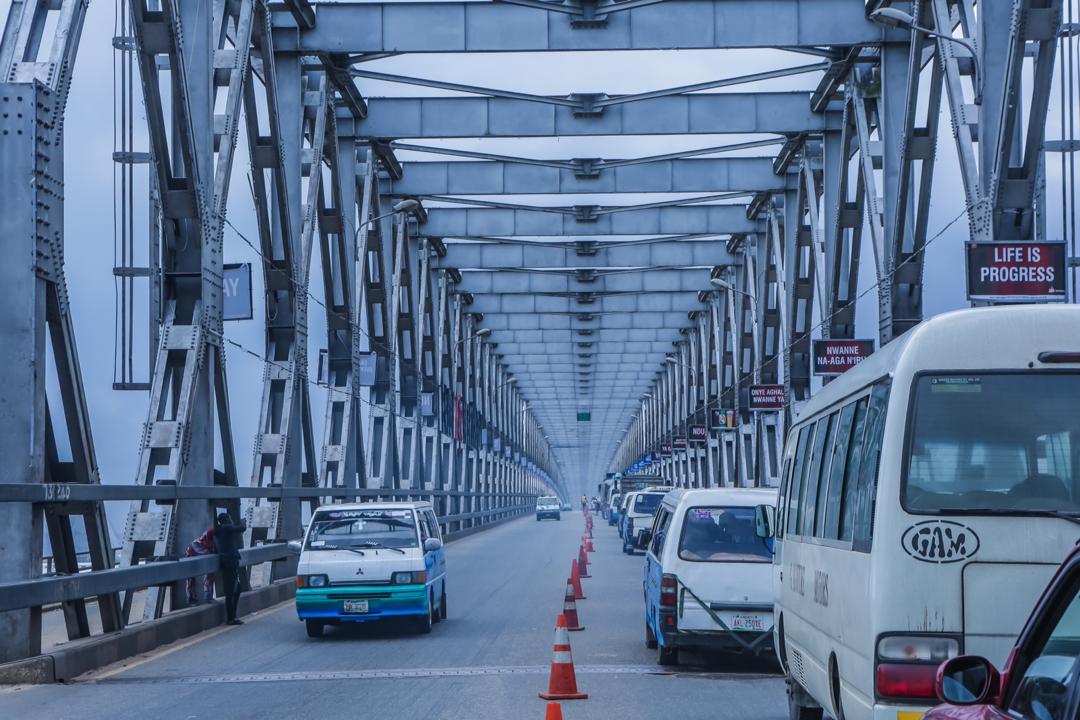
Umahi Orders Demolition Of Concrete Barrier On First Niger Bridge After Public Outcry
The Minister of Works, David Umahi, has ordered the demolition of the concrete median barrier recently installed on the First Niger Bridge, following widespread complaints from motorists, engineers and residents.
The historic bridge, which links Onitsha in Anambra State to Asaba in Delta State and was constructed in 1965, was closed to traffic from September 7 to September 21, 2026, for emergency repairs. The closure was later extended by one week due to heavy rainfall.

The Federal Government shut down the bridge after discovering massive vandalism of its critical components, including bolts, nuts and expansion-joint steelwork, allegedly removed by scrap scavengers.
During the rehabilitation work led by the Federal Ministry of Works, contractors installed a central concrete divider to separate traffic flowing into Onitsha from those heading to Asaba, and also commenced replacement of vandalized bolts, scarification of failed asphalt, installation of solar streetlights and CCTV cameras.
However, the introduction of the barrier triggered immediate backlash. Motorists and civil engineers argued that the 61-year-old bridge was originally designed with an open, single-space roadway and is already narrow. They warned that the concrete divider made the lanes dangerously tight, could add unnecessary dead weight to the aging structure, and that a single vehicle breakdown could block the entire bridge.
Mixed reactions trailed the development. While some road users said the demarcation would bring order and ease traffic, others insisted it posed a serious safety and structural risk.

Videos now circulating online show construction workers breaking down the concrete barrier on the bridge, reportedly on the directive of Minister Umahi.
The Federal Controller of Works in Anambra State, Timothy Emenike, had earlier said the rehabilitation plan includes emergency lay-bys at intervals and towing trucks positioned at both entry and exit points to prevent gridlock in case of breakdowns.
The First Niger Bridge remains a critical economic link between the South-East, South-South and other parts of the country. During its closure, motorists were diverted to the Second Niger Bridge through Obosi, with transport fares between Asaba and Onitsha rising to N1,500 – N2,000 per trip.
Umahi, who inspected the bridge last Wednesday, had stated that the bridge would not be reopened until major structural repairs were completed. He also directed that the approaches to the bridge be done in concrete instead of asphalt, and that all metal elements and kerbs be repainted.
He has also banned dredging activities around the bridge and ordered security agencies to monitor scrap markets in Anambra and Delta States to prevent further vandalism.
The Ministry is yet to issue an official statement confirming the demolition order, but engineers have called for a revised traffic arrangement that balances structural protection, traffic flow and emergency access.


